

September 30, 2025
OTTAWA – Citing mounting threats to Canada’s national security, B’nai Brith Canada is calling on the Federal Government to commission a study of digital radicalization among Canadian youth.
“There is a direct link between online radicalization and real-world acts of violence,” said Richard Robertson, B’nai Brith Canada’s Director of Research and Advocacy. “This problem has only gotten worse during the past few years, despite cooperation between some technology companies and governments around the world.”
Robertson said B’nai Brith Canada is urging the Standing Committee on Public Safety and National Security to conduct a proper investigation, drawing on recommendations from security agencies, experts and representatives of marginalized communities. “This should inform legislation designed to combat the acceleration of this problem,” he said.
“Internet-based radicalization is not a novel phenomenon,” Robertson said. “The Government should heed the advice of its own intelligence agencies, which have called for a robust, whole-of-society approach to combating online radicalization.”
Since the early 2000s, the Federal Government has published multiple reports warning that, as youth have been spending ever-greater amounts of time online, they are becoming exposed to disinformation, psychological manipulation and other threats to their wellbeing. During 2024, the Royal Canadian Mounted Police (RCMP) and the Canadian Security Intelligence Service (CSIS) issued a direct call to parents, educators, technology companies and others to take precautions to prevent youth in their care from becoming radicalized.
During the 2010s, the Islamic State (Daesh) placed an emphasis on social media, using it to groom youths in Canada, the U.K, and other places, encouraging them to either commit atrocities or move to Syria and join the terrorists’ ranks. Within the past five years, police have used digital footprints to apprehend teenagers in the process of planning terrorist activity. In Canada, for example, the RCMP last year detained a Winnipeg teen who is alleged to have been associated with the Maniac Murder Cult (MKY), a violent white supremacist movement.
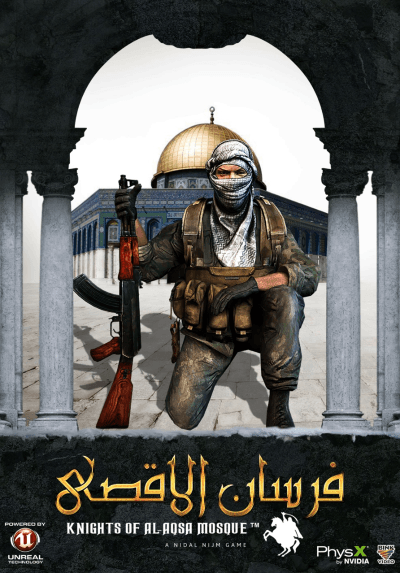
Since Hamas’ Oct. 7, 2023, terrorist attacks on Israel, B’nai Brith Canada has raised additional concerns about violent extremism and antisemitism within the digital realm. In March, 2025, following B’nai Brith Canada’s advocacy, the Minister of Public Safety wrote to the video-game platform Valve to ask it to remove “Knights of Al-Aqsa,” a video game that glorifies Hamas and allows users to reenact its Oct. 7 incursion.
Despite multiple requests from B’nai Birth Canada and the Federal Government, Valve still has not removed Knights of Al Aqsa from its platform, exposing Canadians to its vitriolic content.
“As a society, we cannot permit the crisis of online radicalization to deepen and fester,” Robertson said. “Canada must take firm action in defence of its youth, its national security and Canadian values.”